Reading style
The Lies About Pet Safe Pest Control
For pet households, safer rodent control means minimizing toxic exposure and using exclusion plus controlled trap placement.


Stop searching for "pet-safe poison" as a default answer.
In homes with dogs or cats, exposure risk management must come first.
A rodent issue in a pet household creates a real conflict:
solve quickly, but avoid harming non-target animals.
You can do both if the workflow is structured.
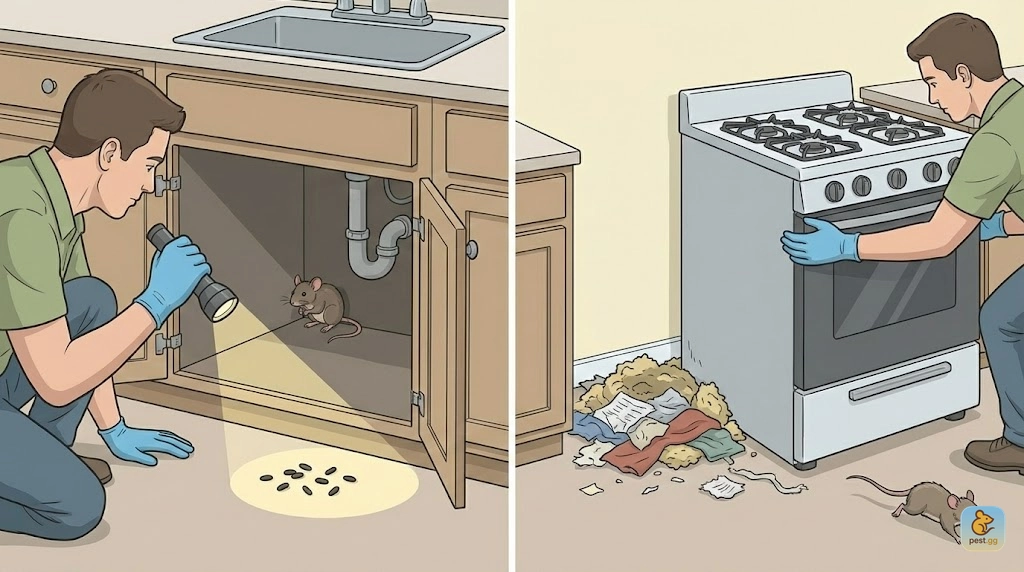
Step 1: Confirm Activity First
Before buying products, confirm evidence.
Look for droppings, gnaw marks, and nesting material in low-disturbance zones.
Species and route identification determine trap type and placement. [1][5]
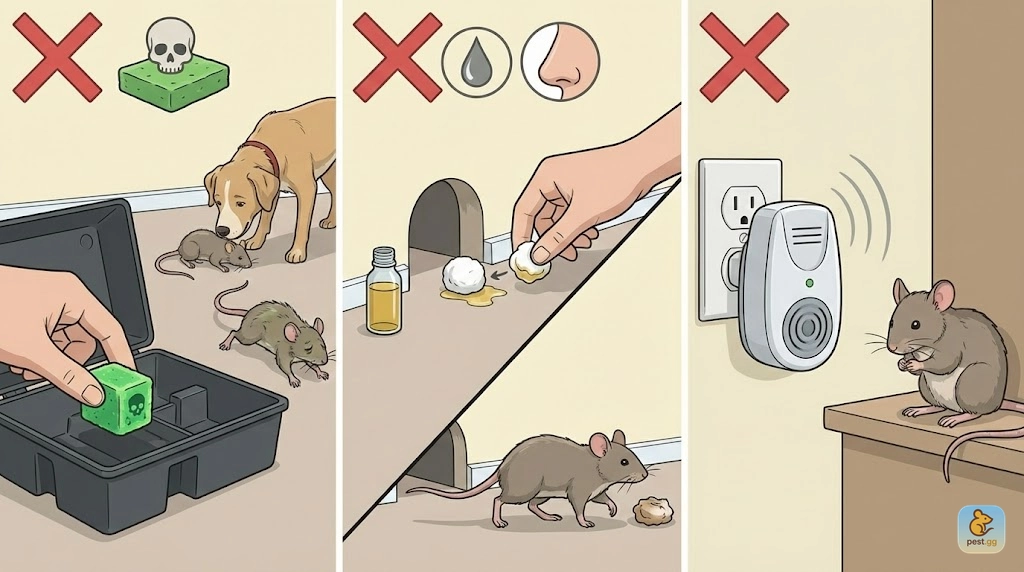
Step 2: Avoid High-Risk Shortcuts
Poison as a default
Rodenticides are toxic by design.
EPA, poison-control, and extension guidance all discuss direct and secondary exposure risk to pets and non-targets. [1][2][3]
Repellent-only strategy
Scent and sound deterrents are often short-lived and unreliable when food/shelter remain available.
UC IPM notes no repellents solve rodent problems for more than a short time. [1]
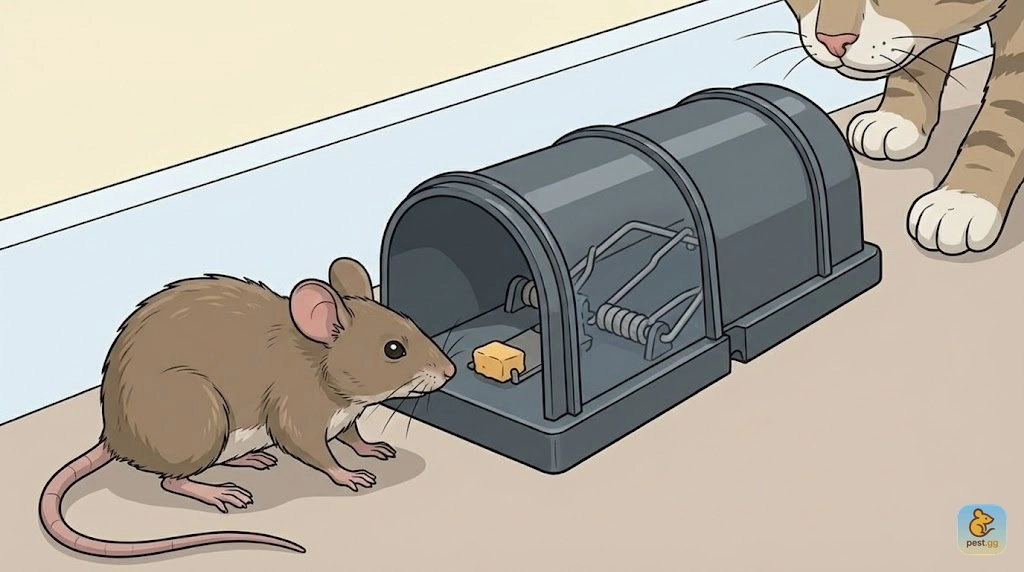
Step 3: Use a Pet-Safer Protocol
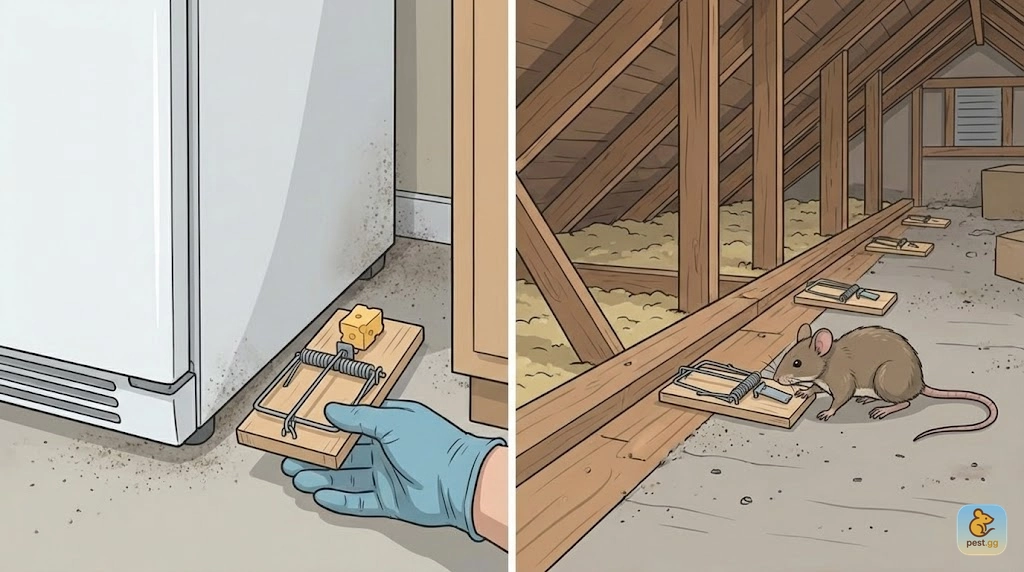
Use enclosed or controlled trap setups
Place traps where pets cannot access them.
CDC guidance: keep traps and baits out of reach of children and pets. [5]
Use prebaiting for cautious rodents
For trap-shy behavior, leave traps baited and unset briefly before activation.
This can reduce avoidance in neophobic populations. [1]
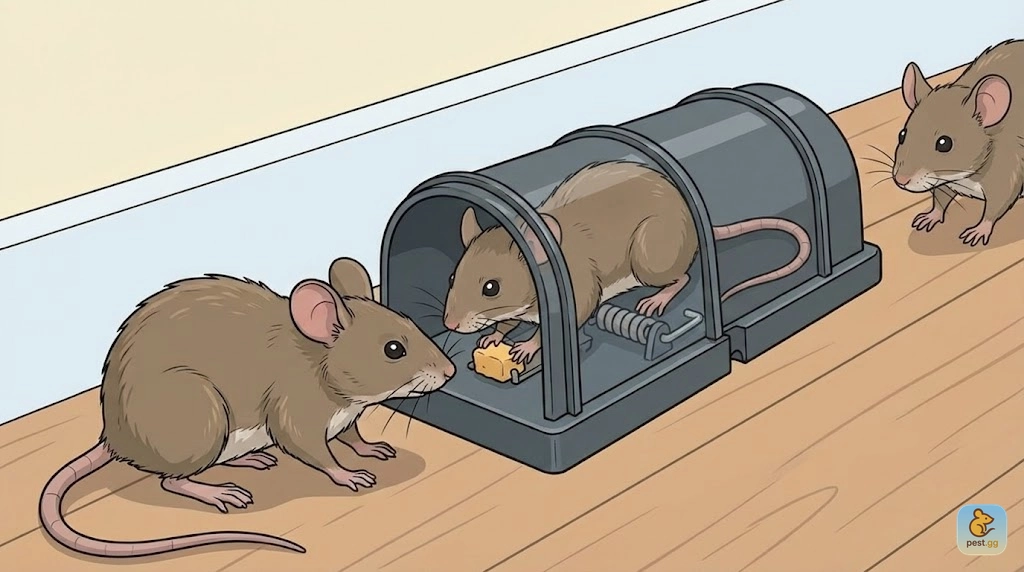
Place on routes, not open floors
Deploy along baseboards and known runways.
Avoid random center-room placement.
Step 4: Permanent Fix = Exclusion
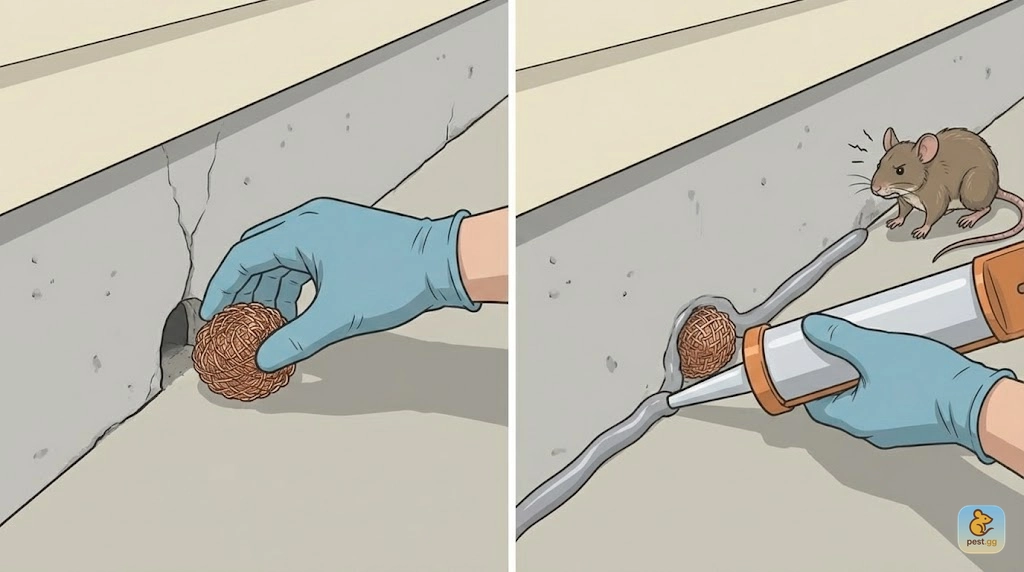
Rodent removal without exclusion invites reinfestation.
CDC guidance: mice can fit through openings around 1/4 inch.
Fill small holes with steel wool and lock with caulk/foam. [6]
Reduce food access and clutter to lower return pressure.
Step 5: Maintain a Weekly Check Cycle
- Verify trap status and reset as needed.
- Remove and clean safely.
- Reinspect sealed points and new gaps.
- Escalate to professional support if daytime activity persists.
Conclusion
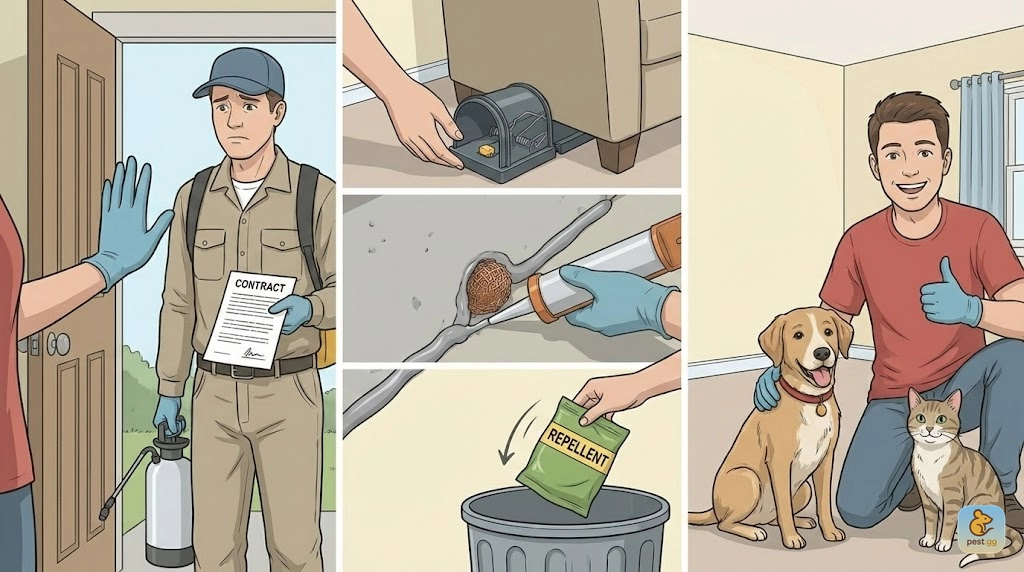
For pet households, safer control is not a single product.
It is a sequence:
identify, avoid high-risk toxic shortcuts, trap in protected zones, seal entry points, and keep follow-up checks active. [1][5][6]
References
—
Responses (0)
Loading comments...


