Reading style
How to Catch Smart Mice: Overcoming Neophobia & Trap Shyness
When traps stay empty, behavior is usually the issue. Use species ID, route placement, and prebaiting to reduce avoidance.


You bought a good trap, used decent bait, and placed it on the wall.
Still nothing.
That is usually not bad luck.
It is behavior.
What Is Neophobia?
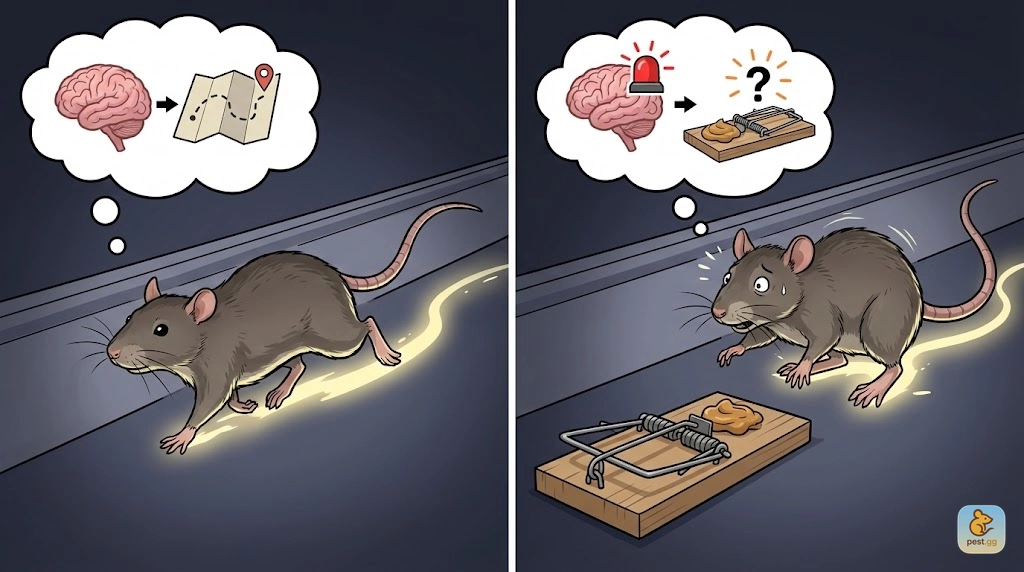
Neophobia is caution toward new objects and new foods.
In rodent control, it appears as trap avoidance and delayed approach.
UC IPM describes this strongly in rats, which may avoid new objects for days or longer. [1]
Identify Target First: Mouse vs Rat
Before selecting strategy, confirm what you are targeting.
Trap size, bait handling, and acclimation timing differ by species. [1][3]
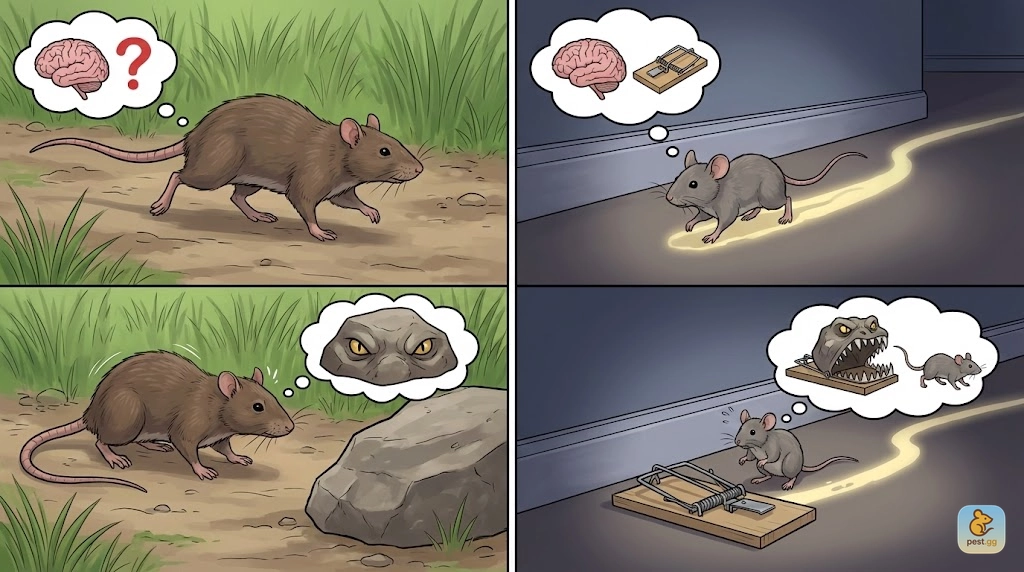
- House mice: often more exploratory in short routes.
- Rats: typically more cautious around novel objects.
Why They Ignore Traps: Route Memory
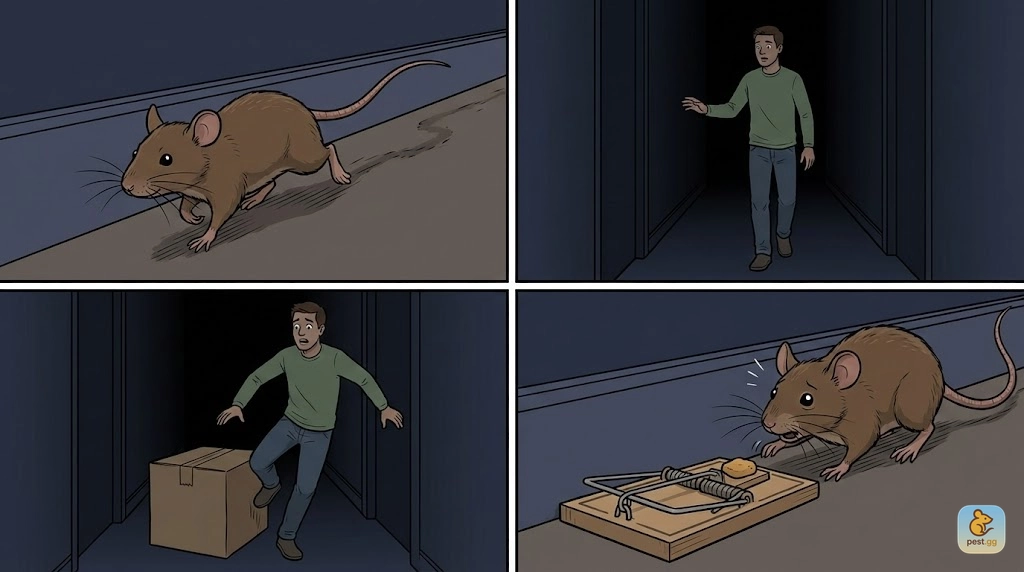
Rodents often follow repeated travel corridors, especially along walls and edges.
If your device interrupts a known route in an unfamiliar way, avoidance can increase.
Placement quality matters as much as trap type. [1][2]
Prebaiting Protocol for Trap-Shy Rodents
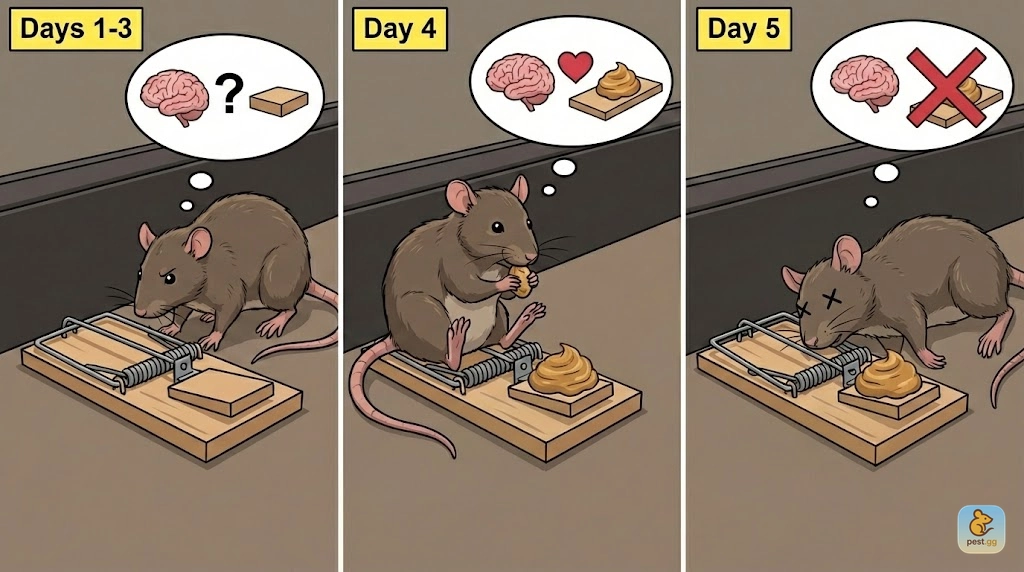
Stage 1: Acclimation
Place trap on active route, but do not set it.
Leave it in place for several days.
Stage 2: Trust Building
Add bait to the unset trap and observe for acceptance.
Stage 3: Activation
Once feeding is consistent, set the trigger.
This staged method is aligned with UC IPM guidance to reduce trap shyness in cautious rodents. [1]
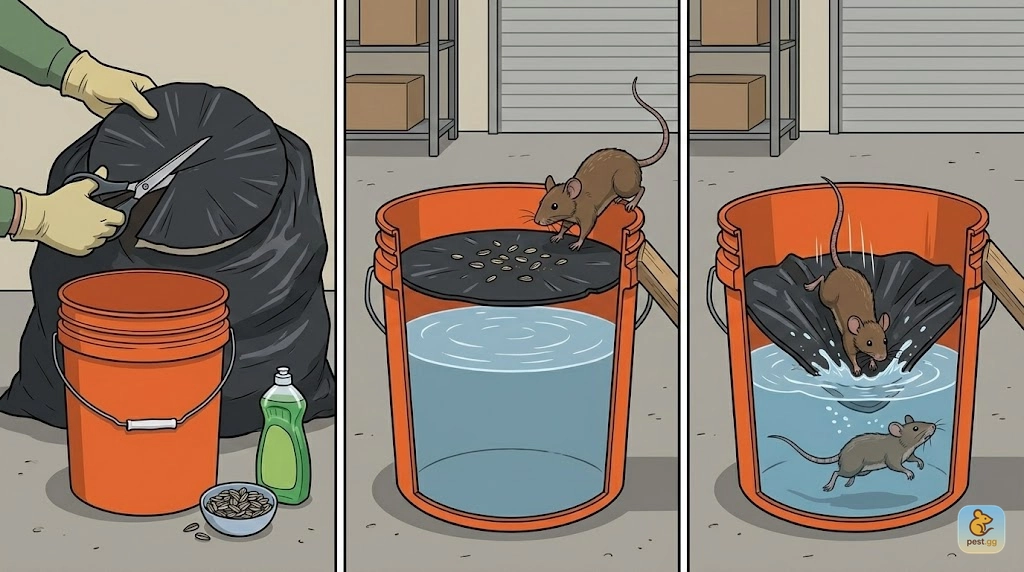
High-Volume Option: False-Floor Bucket Workflow
For heavy mouse activity in garages/sheds, single-trap prebait cycles can be slow.
Bucket-style systems can increase throughput when configured correctly.
Use this method carefully, monitor frequently, and pair it with exclusion.
Health Stakes and Cleanup Discipline
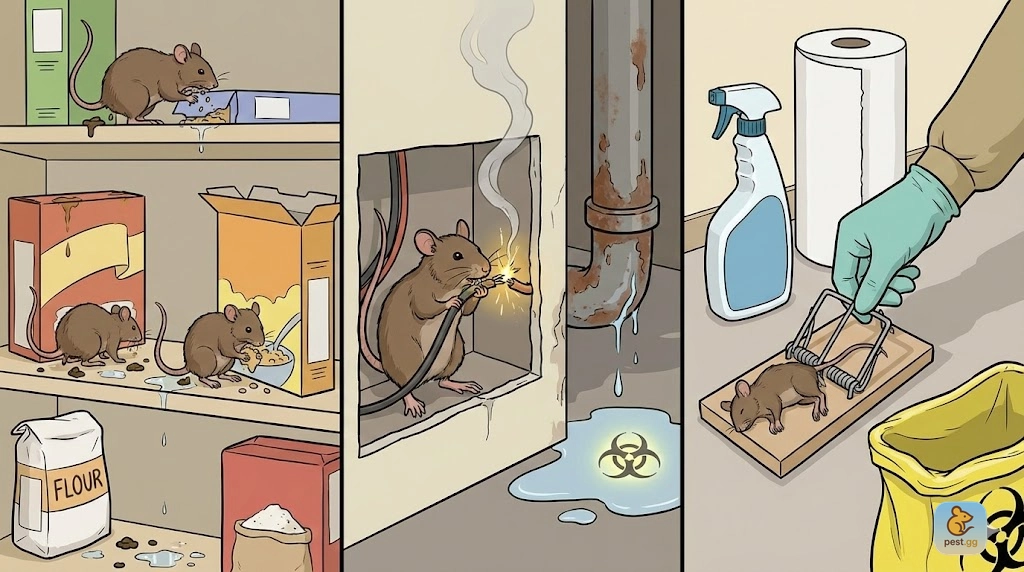
Rodents can contaminate environments and create health risks.
Use gloves for carcass handling and follow safe cleanup protocol for affected areas. [2][4]
Do not treat trapping as complete until sanitation and sealing are also done.
Conclusion
If traps are being ignored, assume behavior mismatch before assuming tool failure.
Identify species, place on routes, prebait when needed, and follow through with cleanup and exclusion.
That is how you catch "smart" rodents consistently. [1][2]
References
—
Responses (0)
Loading comments...


