Reading style
How to Catch a Mouse: Best Strategies & Tools
Catching rodents is not luck. Identify the species first, then match the trap, bait, and placement strategy.


You discover droppings in the pantry and hear scratching in the wall.
Your first instinct is to buy one device and throw it down immediately.
Stop.
Learning how to catch mice is not about luck. It is about strategy.
Step 1: Identify the Intruder
Before you buy anything, look at the evidence.
A strategy that works for mice can fail for rats, and a rat trap may not trigger for mice. [1][2]
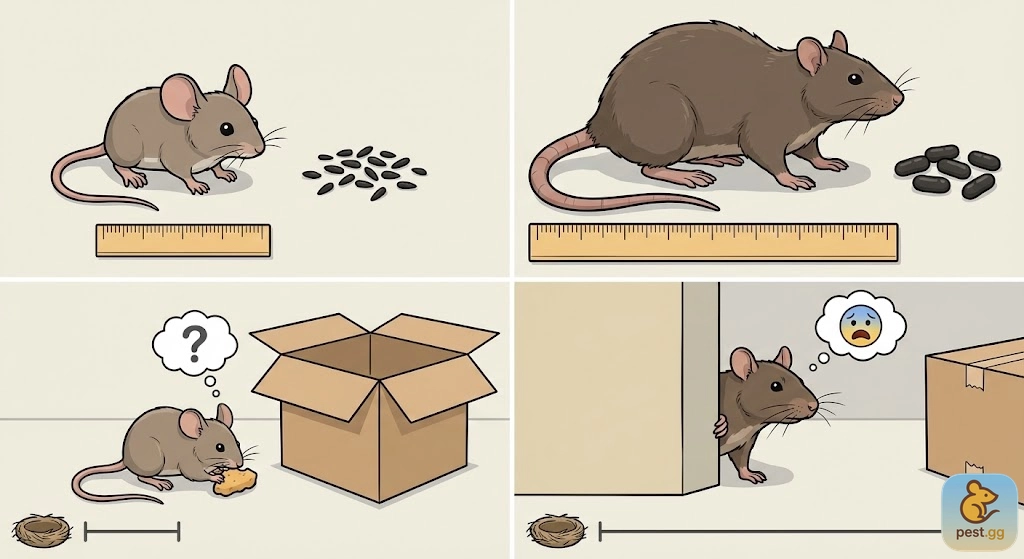
Use this table to separate likely house-mouse activity from rat activity.
| Feature | House Mouse | Rat (Norway / Roof) |
|---|---|---|
| Body Size | Smaller body and feet | Larger, heavier body |
| Droppings | Smaller, rice-like | Larger, capsule-like |
| Behavior | Often more exploratory | More cautious around new objects (neophobia) |
| Travel Pattern | Close-range indoor routes | Broader routes, structural runways |
| These distinctions are consistent with extension and preservation guidance used for rodent identification. [1][5] |
Step 2: Understand the "Repeller" Myth
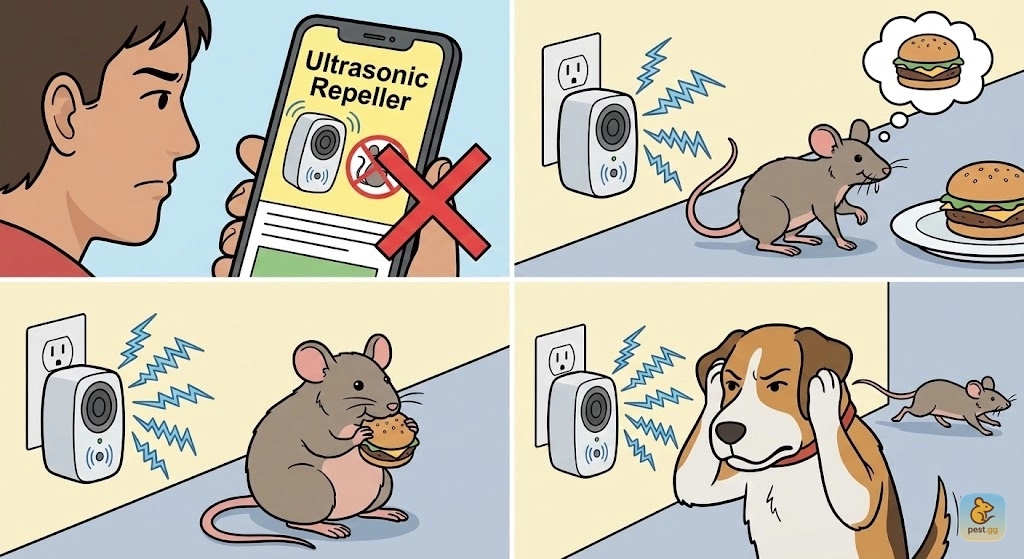
Ultrasonic and frightening devices are heavily marketed.
But rodents often adapt to repeated sounds, and high-frequency deterrents are generally ineffective for sustained control. [1]
If food, water, and shelter are available, annoyance alone will not solve the infestation.
Step 3: Catch a Mouse (The "Minefield" Strategy)
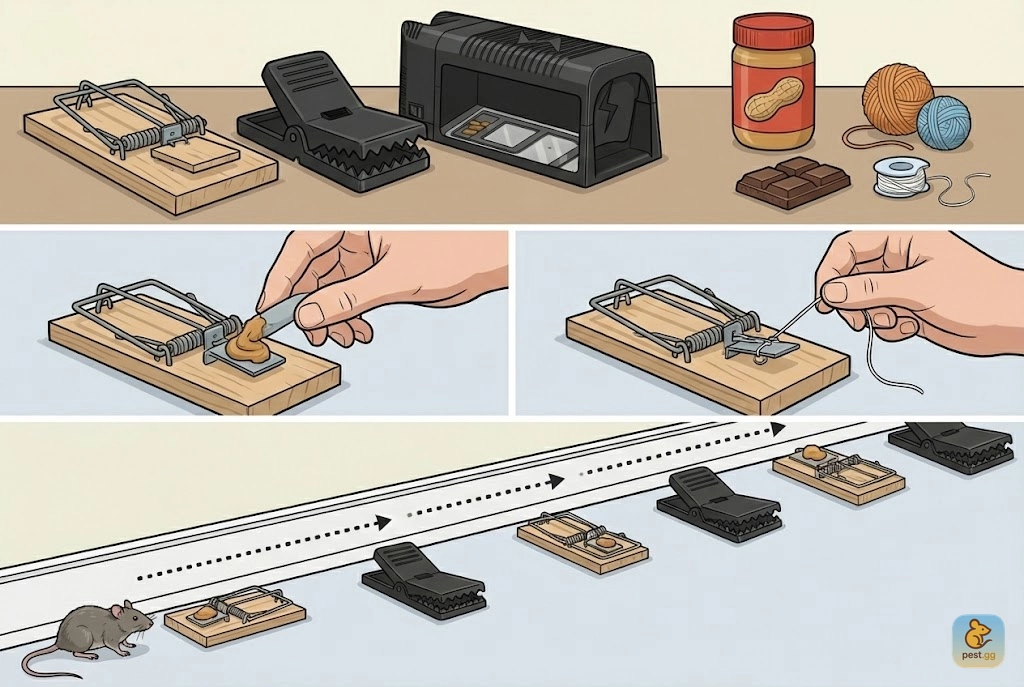
For active mouse routes, use multiple traps instead of one.
The Weapon
Use standard snap traps or equivalent enclosed mouse-rated devices. [2]
The Bait
Use small portions of attractive bait on the trigger: peanut butter, chocolate, nuts, or other foods already being eaten.
The Strategy
Mice commonly travel along walls and edges.
Set several traps along those paths, close to baseboards, with proper spacing. [1][2]
For mice, you can usually deploy immediately without a long acclimation phase.
Step 4: Catch a Rat (The "Long Con" Strategy)
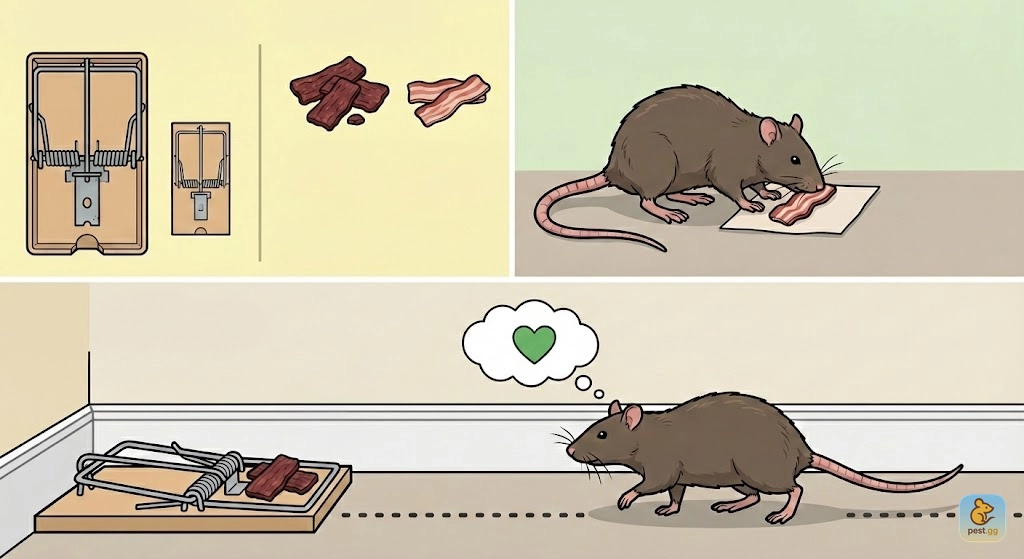
Rats are typically more cautious than mice around new objects and foods.
The Weapon
Use rat-rated snap traps and place them where signs are strongest.
The Bait
Choose bait profiles rats already accept in that environment.
The Strategy: Prebaiting
Phase 1: place baited traps unset for several nights.
Phase 2: once acceptance is clear, set triggers.
This prebaiting pattern is a documented method to reduce trap shyness in neophobic rat populations. [1]
Step 5: Use a Humane or High-Volume Option
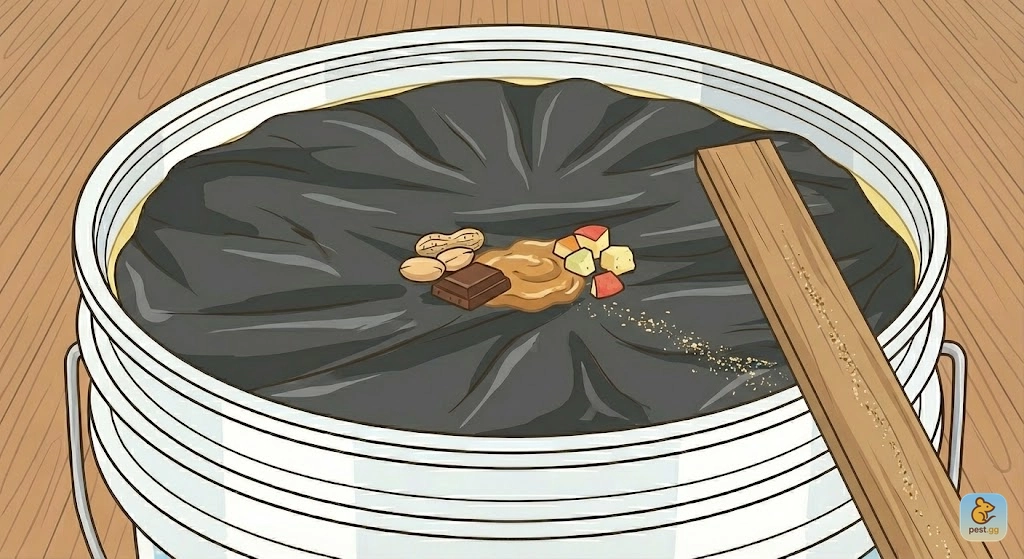
When activity is high, bucket-style systems can reduce reset burden.
The Bucket Method
A ramp leads to bait on a rotating or unstable top surface over a bucket.
When the rodent commits to the center, the surface shifts and capture occurs.
The "False Floor" Upgrade
A floating or unstable false floor can increase commit-and-drop behavior in high-pressure zones.
For catch and release, the receiving bucket can be configured dry.
Step 6: Know What to Avoid (Glue Boards)
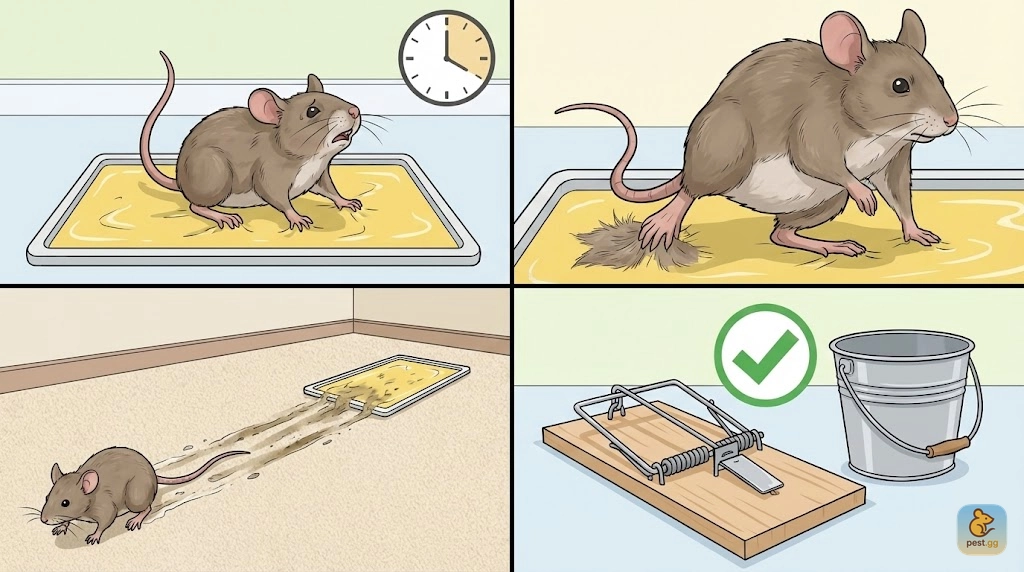
Glue boards are widely sold but often underperform outside professional conditions.
They can also create severe welfare concerns and non-target risk.
UC IPM guidance generally does not recommend glue boards for typical nonprofessional household use. [1]
Step 7: Troubleshoot Why Traps Fail
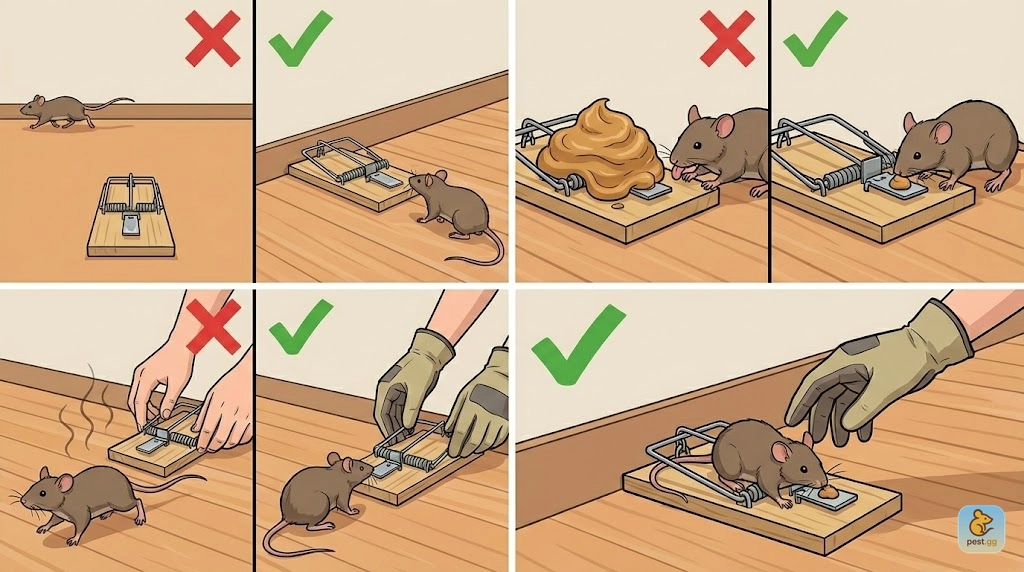
Wrong Placement
If the trap is in the center of an open room, move it to active wall routes. [1][2]
Too Much Bait
Large bait blobs can be stolen without trigger pull.
Use a small amount so force is applied on the trigger.
Human Handling and Hygiene
Use gloves for handling and disposal workflow.
Clean and reset consistently after each catch. [1][4]
Step 8: Cleanup & Prevention
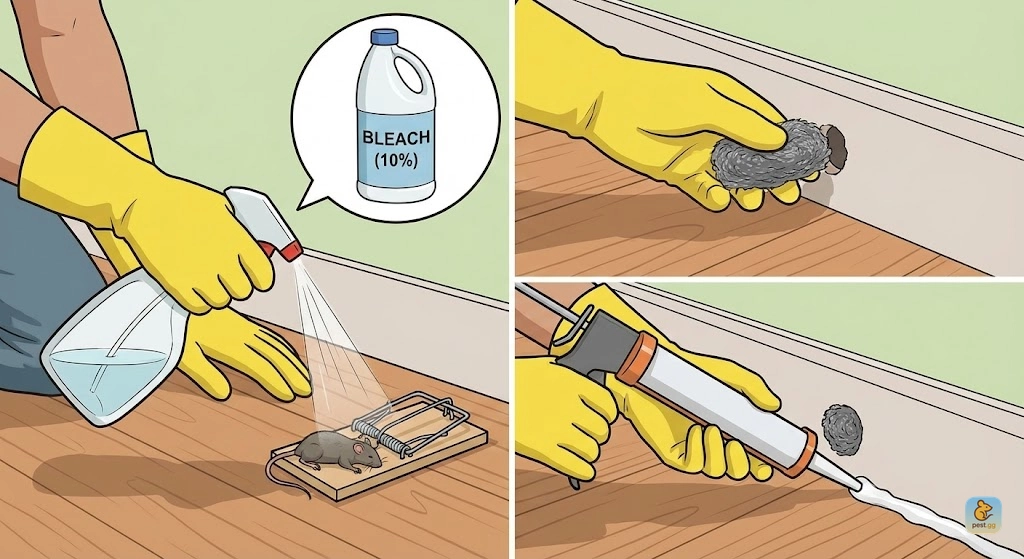
Capture is only part of control. Exclusion prevents recurrence.
- Safe Cleanup: Follow protective cleanup workflow for rodent waste and carcass handling. [4]
- Seal Entry Points: Mice can pass through very small gaps (about 1/4 inch); seal with steel wool plus caulk or foam. [3]
- Food Control: Store food securely and reduce accessible crumbs and clutter. [2][3]
Conclusion
Effective rodent control is sequence-driven:
identify species, match tools, place correctly, clean safely, and seal entry points.
That is how you turn random trapping into repeatable results. [1][2][3]
References
—
Responses (0)
Loading comments...


