Reading style
Learn the best mouse trap strategy: The False Floor.
A humane, new way to catch mice. This innovative bucket mouse trap outsmarts pests better than snap traps. Easy to set with peanut butter.


A humane, new way to catch mice. This innovative bucket mouse trap outsmarts pests better than snap traps. Easy to set with peanut butter.
Are mice in your home driving you crazy?
You are not alone.
Many homeowners struggle with mouse problems. This happens even after buying expensive equipment.
You set traps diligently and check them every morning.
But often, the traps don't work. The mouse steals the bait and escapes.
Standard methods like glue traps can fail, and even the popular Tomcat press n set can miss. [1]
Why traditional traps fail
Because mice are smart.
They learn to avoid danger.
A different way to think about catching mice
To solve this, use their own instincts against them.
You need to learn how to outsmart mice with a false floor trap.
Here is a new way to catch mice.
Arguably the best mouse trap for cautious rodents, this DIY solution is humane and incredibly effective.
Why This Method Works
Most people look for how to catch mice using pain or poison.
But this method uses deception. [1]
We call it the "False Floor" strategy.
The method relies on a bucket. Many farmers already know how to catch mice with a barrel, and this version adapts the same idea for home use.
This setup tricks the mouse's depth perception.
They think they are stepping onto solid ground.
By the time they realize the trap, it is too late.
What You Will Need
This trap is cheap to build. Setting up is also easy.
- A 5-Gallon Bucket: A standard clean bucket (19L).
- Cooking Oil: Vegetable or canola oil.
- Water: To fill the bucket base.
- Black Plastic Trash Bag: It should be textured or wrinkled.
- Bait: Peanut butter, chocolate, peanuts, or fruit. [1]
- Ramp: A piece of wood or yardstick.
- Gloves: For safety.
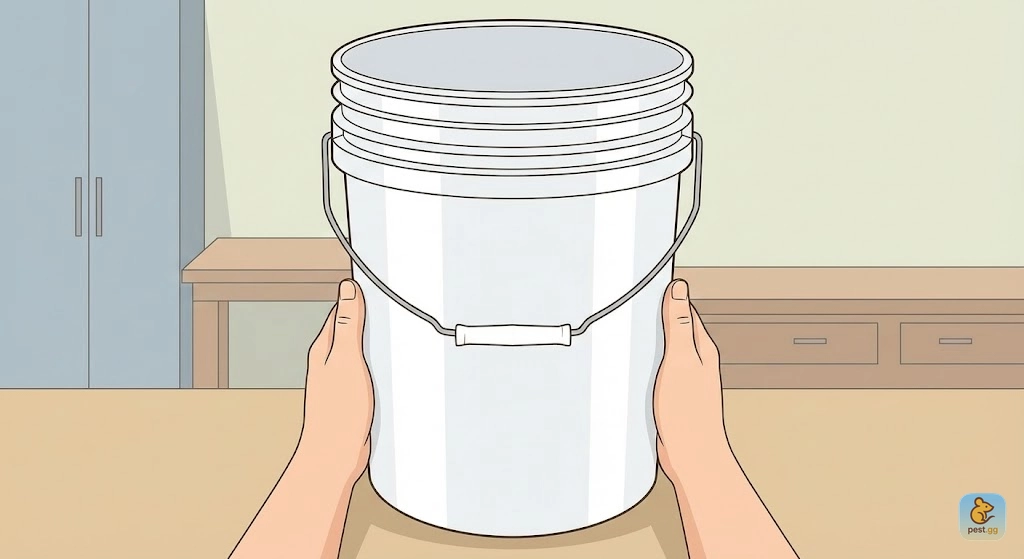
Step 1: Prepare the Bucket
Start with a clean 5-gallon bucket.
Make sure it does not smell of chemicals.
Strong chemical smells can reduce mouse activity around the trap.
The bucket needs to be tall. Standard hardware store buckets (about 15 inches / 38 cm) are ideal.
This helps prevent escape after the fall. [2]
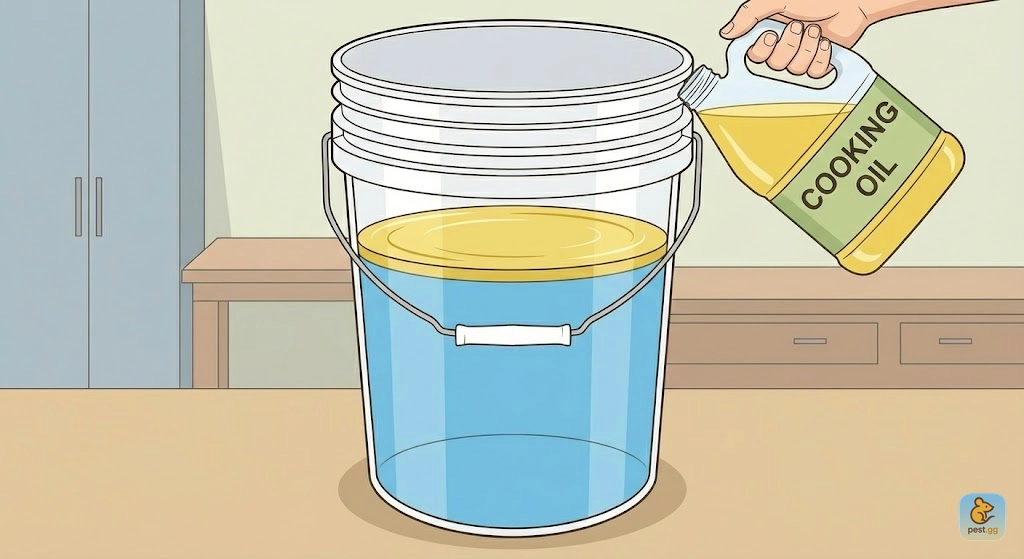
Step 2: Create the Liquid Base
Fill the bucket with water.
Stop when the water reaches about 60% capacity.
Next, pour a layer of cooking oil on top.
Cover the water completely.
Why this matters:
The 60% height is a balance.
The water is deep enough to reduce jumping success, yet the surface still appears reachable.
When a mouse stands on the rim, the top layer can look like a safe landing zone.
That visual mistake is the core of the trap.
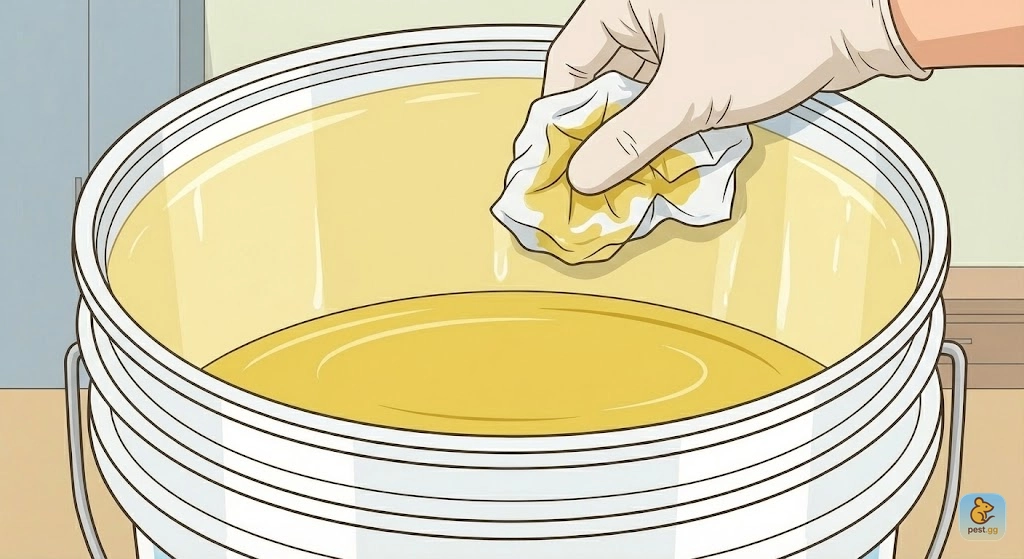
Step 3: Grease the Inner Walls
Dip a paper towel in cooking oil.
Wipe the inside walls of the bucket.
Focus on the area above the water line.
This creates a slippery barrier.
Mice can climb rough surfaces, but traction drops sharply on oiled plastic. [2]
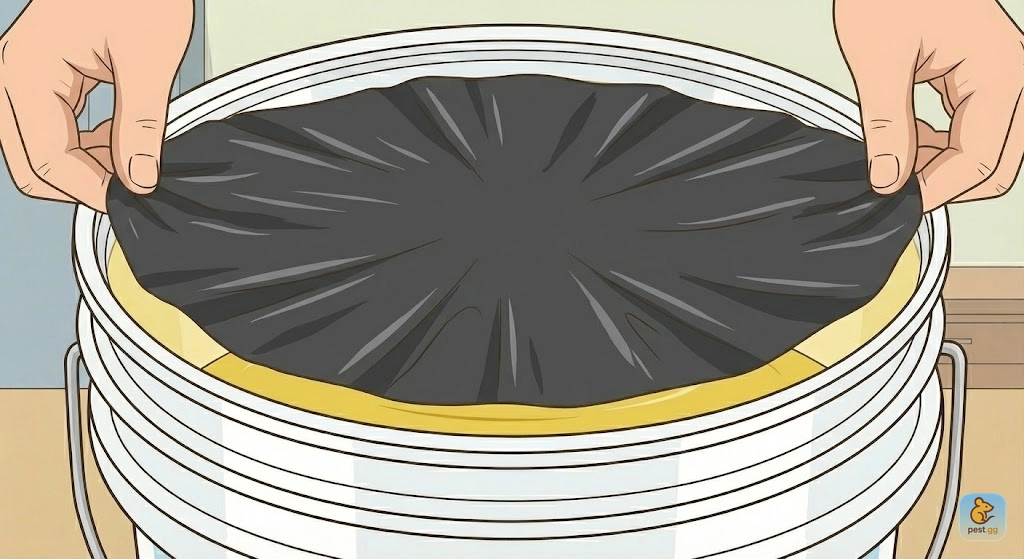
Step 4: Float the "False Floor"
This is the secret weapon.
Take a black plastic trash bag.
Cut a circle slightly larger than the bucket.
Gently place it on top of the oil layer.
Texture is key:
Do not smooth it out. Keep wrinkles and folds.
A flat sheet looks artificial.
A wrinkled bag looks like unstable but real surface clutter.
When the mouse steps on this "floor," the plastic cannot support weight.
It collapses instantly and the mouse drops.
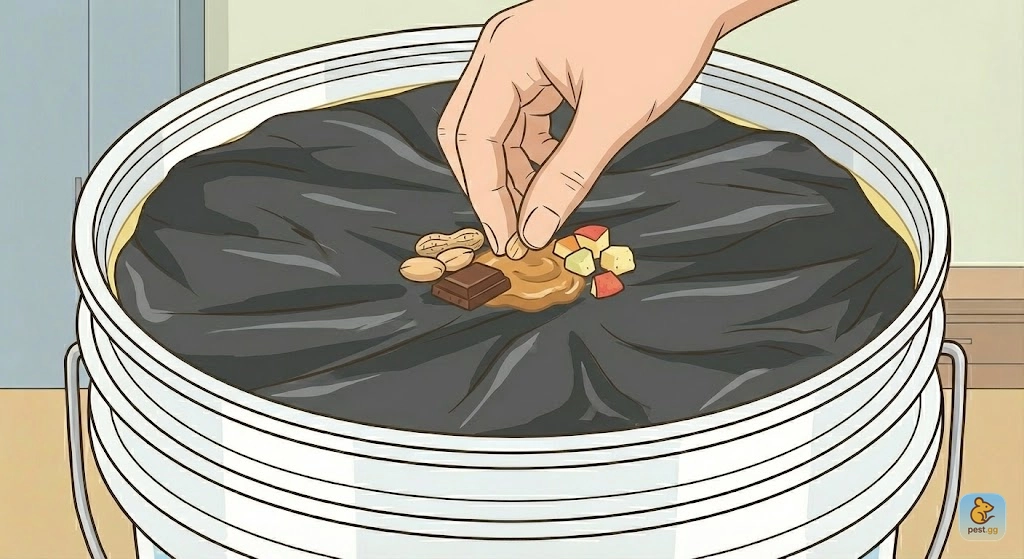
Step 5: The "Buffet" Bait Strategy
To lure the mouse to the center, do not rely on cheese alone.
Use a mixed bait set in the exact center of the floating plastic: a peanut butter smear, a piece of chocolate, and a whole peanut.
Why this works: the variety raises curiosity and scent range, forcing commitment to the center point.
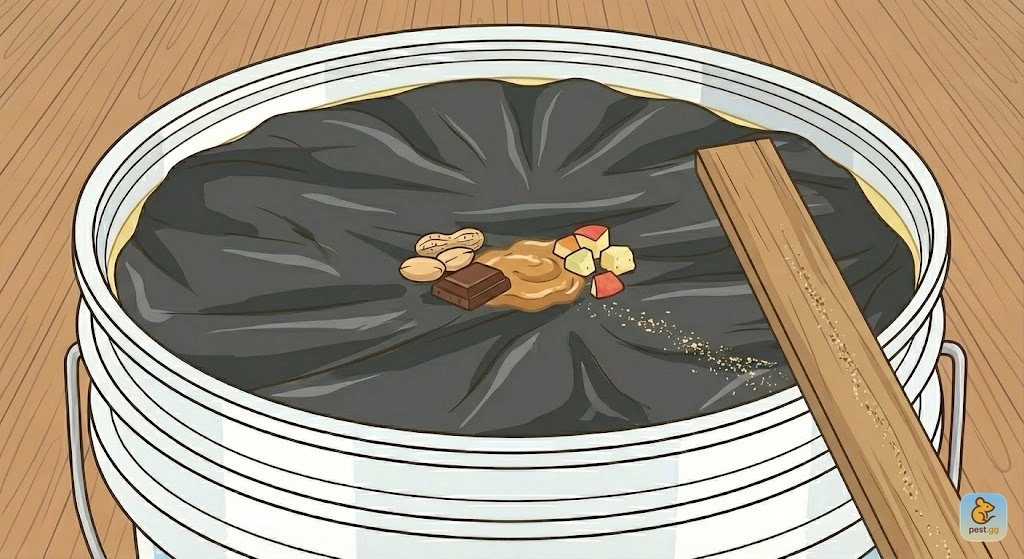
Step 6: The Ramp and Pre-Baiting
Lean your wooden ramp against the bucket.
Now, here is a practical tip on how to catch mice effectively:
place only a tiny crumb of bait on the ramp.
Warning: do not put too much food here.
Overfeeding on the ramp can make mice leave before reaching the main bait.
You want them motivated to cross onto the floating plastic.
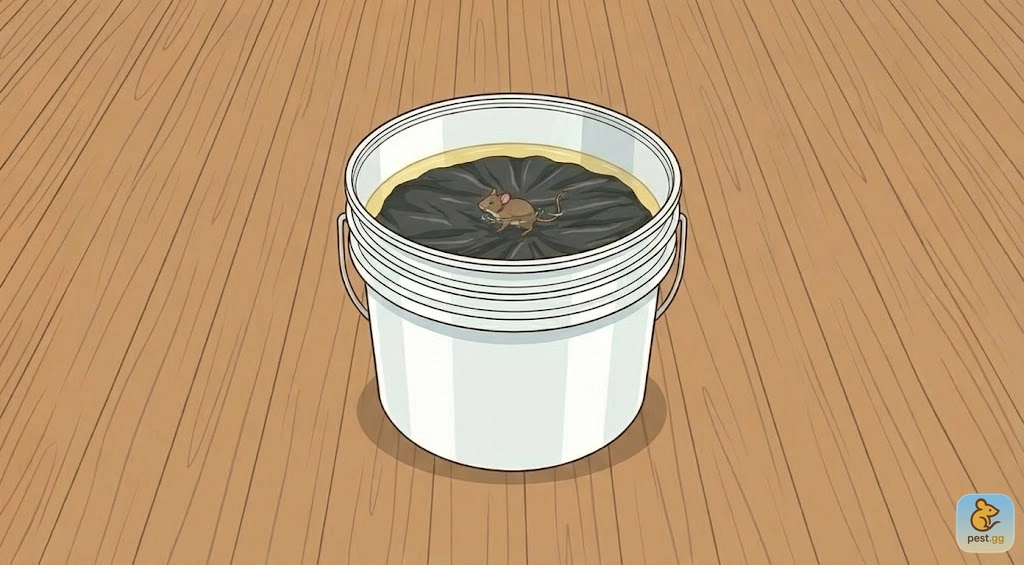
Step 7: Check and Reset
Check the trap the next morning. [1]
You will likely find the mouse in the water.
If you prefer a catch and release setup, use less water (or no water) and only oil.
However, deeper water generally reduces escape.
If you are dealing with dead mice, wear gloves and clean safely. [3]
Even better, this trap resets itself.
The oil settles and the bag can float back up.
The trap is ready for the next mouse.
Conclusion
Stop wasting money on snap traps that miss.
Stop using glue traps that are cruel and messy.
If you have mice in your home, you need a better solution.
The False Floor bucket trap is a practical choice for DIY pest management. [1]
Set traps like this tonight, and reclaim your home.
References
—
Responses (0)
Loading comments...


