Reading style
Electronic Mouse Traps: Are They Worth the Investment?
Electronic traps can be effective and cleaner to handle, but they still require monitoring, cleaning, and strong placement discipline.


Many homeowners dislike the mess factor of traditional snap traps.
Electronic traps look like a clean upgrade.
They can work, but they are not maintenance-free.
The Classic Electronic Trap
Electronic chambers are designed to deliver an enclosed kill and reduce direct visual exposure.
The Good
- Enclosed handling can feel cleaner for users.
- Disposal is usually more controlled than open snap systems.
The Trade-offs
- Unit price is higher than standard snap traps.
- You still need frequent checks.
- Dead rodents must be removed and the unit cleaned to maintain performance. [1]
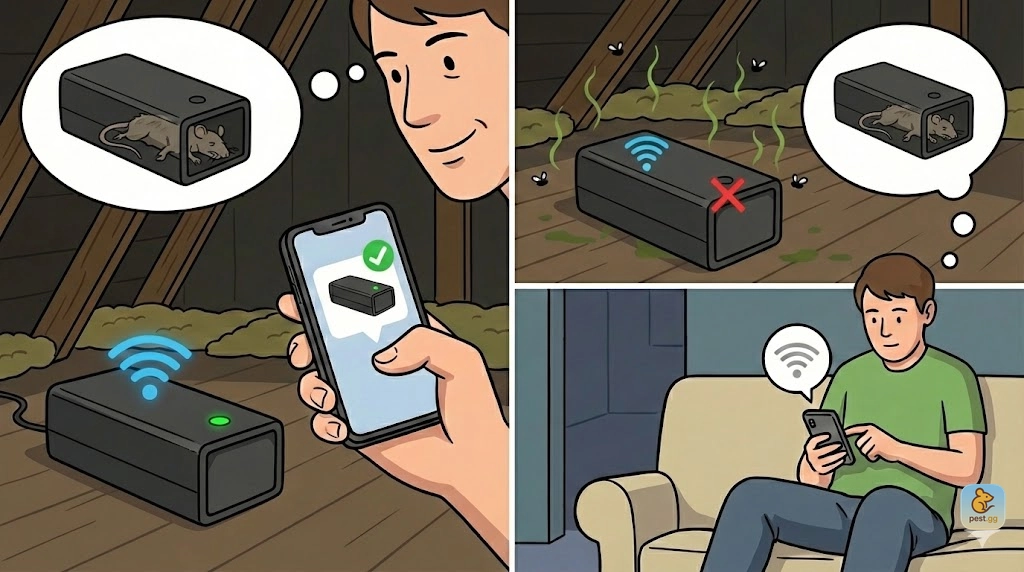
The Smart (Connected) Trap
The Promise
Phone notifications can reduce missed checks in hidden areas.
The Reality
Smart features only help if connectivity is stable and the monitoring workflow is active.
When notifications fail or power is ignored, operational risk returns to the same problem: delayed checks and internal decomposition.
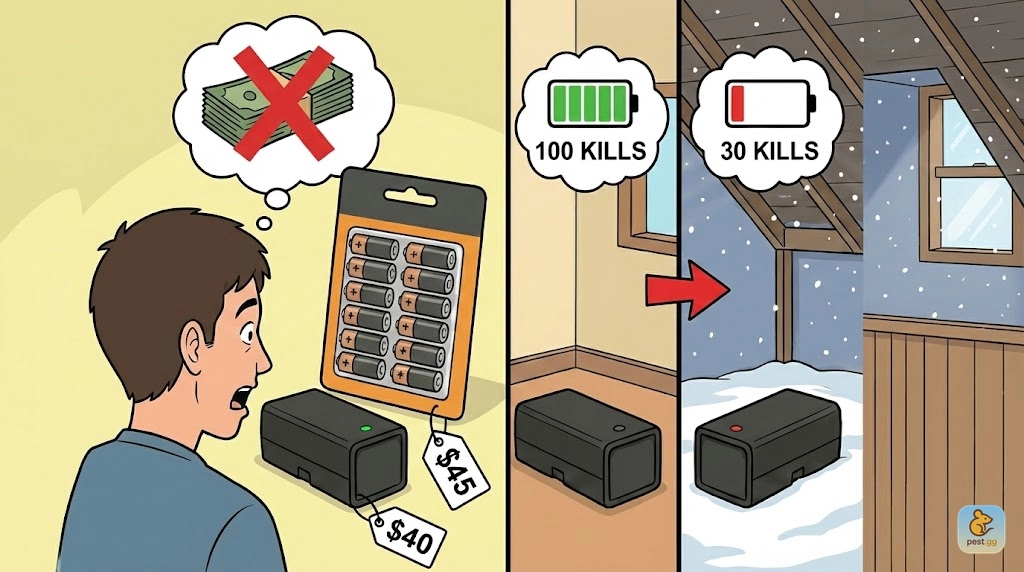
Hidden Operating Costs
Battery and power overhead
Electronic systems add recurring energy costs that snap traps do not have.
Environmental conditions (e.g., low temperatures) can also affect battery performance.
Maintenance time
If residue accumulates on contact surfaces, performance can degrade.
Routine inspection and cleaning are non-optional for long-term reliability. [1]
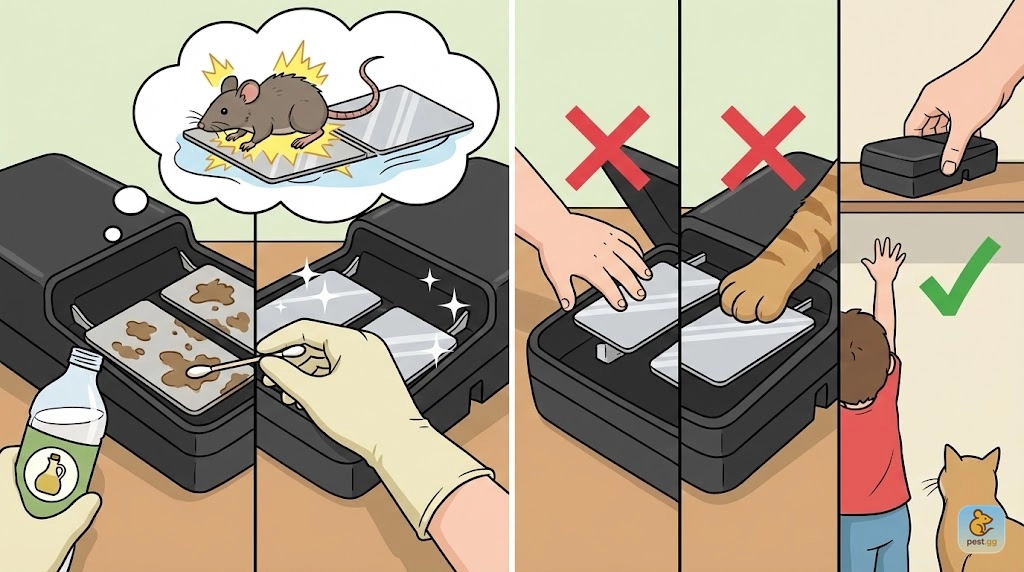
Safety and Placement
Keep all trapping devices away from children and pets.
For any trap type, placement on active wall routes outperforms random center-room placement. [2]
Electronic vs. Other Methods
Vs. Poison
Poison introduces non-target exposure and carcass-location uncertainty.
EPA and extension guidance document these risks. [3][4]
Vs. Snap Traps
Snap traps are cheaper per unit and easier to scale quickly.
Electronic traps offer cleaner handling, but not lower effort overall.
Vs. Bucket Systems
In high-volume mouse pressure zones (garages/sheds), bucket systems can reduce per-catch cost.
They still require monitoring, correct setup, and follow-up exclusion.

Pro Tips for Electronic Trap Users
Bait strategy
Use small bait amounts and avoid overloading the entry area.
Placement strategy
Deploy along baseboards and known runways, where rodent movement is highest. [2]
Exclusion strategy
Traps remove active rodents; exclusion prevents replacement.
Seal gaps and reduce attractants in parallel. [2][5]
Comparison Table
| Feature | Electronic Trap | Smart Trap (Wi-Fi) | Snap Trap | Bucket Trap |
|---|---|---|---|---|
| Upfront Cost | Medium/High | High | Low | Low (DIY) |
| Power Dependency | Yes | Yes | No | No |
| Monitoring Need | High | High | Medium | Medium |
| Capacity per Device | One-at-a-time | One-at-a-time | One-at-a-time | Multi-catch possible |
| Best Fit | Clean enclosed handling | Hard-to-access placements | Budget + scale | Garage/Barn volume |
Conclusion
Electronic traps are viable, but they are not "set-and-forget."
If you choose them, commit to inspection, cleaning, and good placement.
If you need low cost and high scale, snap or bucket workflows may be more practical. [1][2]
References
—
Responses (0)
Loading comments...


