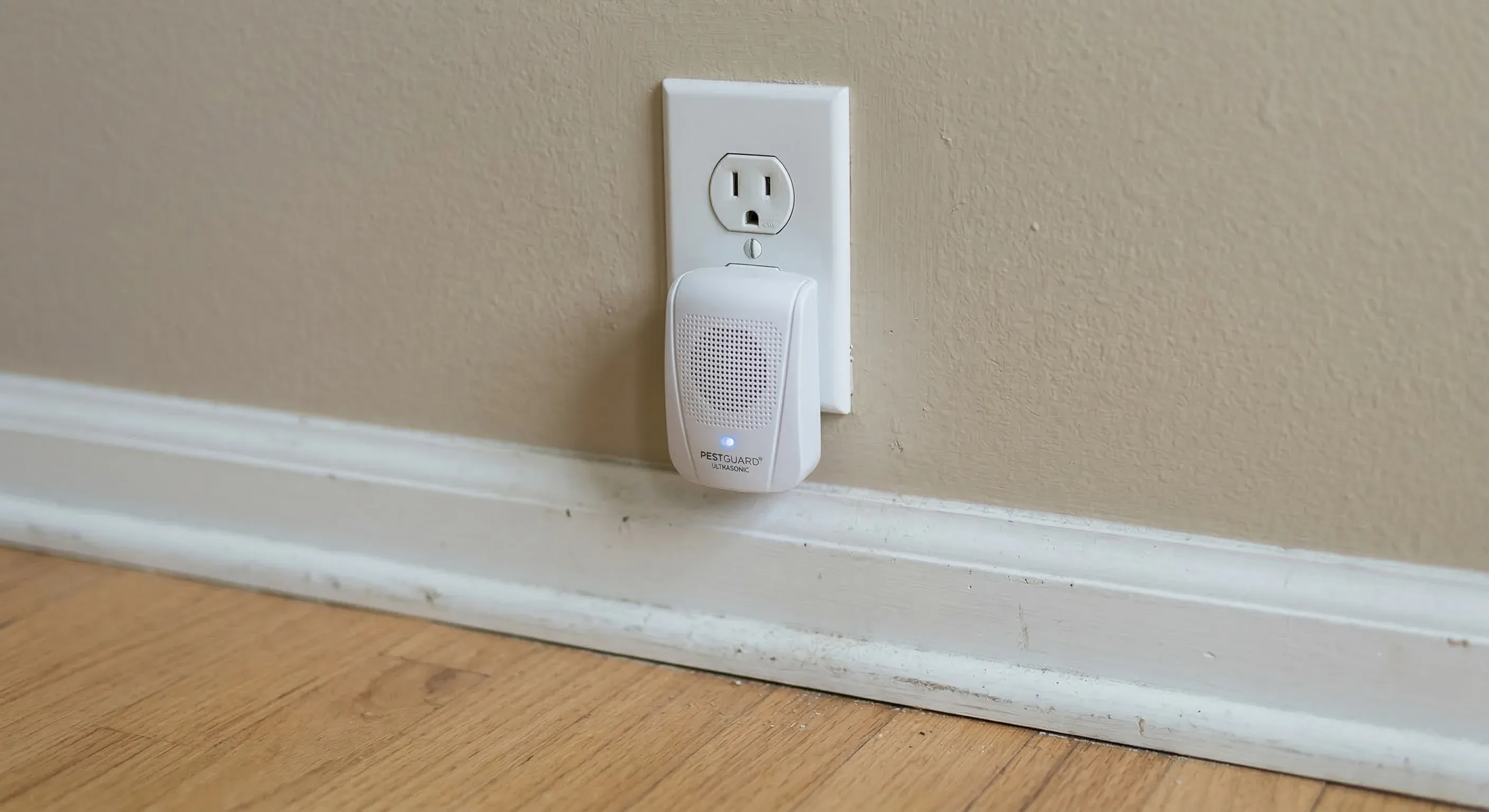
Ultrasonic Repellers
Class: Hall of Shame | Danger Level: Flagged
Breakdown of why ultrasonic repellents fail in real homes, including habituation, weak signal coverage, and false confidence.
Ultrasonic Repellers
Ultrasonic mouse repellers are one of the cleanest examples of a rodent-control scam. They promise easy plug-in protection, but fail because both physics and rodent behavior work against them.
Overview
These devices market fear relief rather than real control. They exploit the idea that a hidden sound field can make rodents abandon a structure without inspection, trapping, or sealing.
Mechanism
The device emits high-frequency sound above human hearing. The theory is that the sound creates an unbearable environment for rodents.
Physics Failure
High-frequency sound does not travel through real homes the way marketing implies. Cabinets, insulation, furniture, walls, and clutter block or distort the signal long before it reaches nesting zones.
Biology Failure
Rodents habituate quickly. Even if the sound initially alters behavior, they adjust within days and resume using the protected space if food, shelter, or heat remain available.
Why It Is F-Tier
- no direct capture
- no structural exclusion
- no elimination of nesting
- delays real action while infestation grows
Better Alternative
Spend the same budget on snap traps, inspection, and physical exclusion. Those methods remove rodents or deny access instead of hoping background noise changes animal behavior.
Conclusion
Ultrasonic repellers fail because they attack the fantasy of infestation control, not the infestation itself.
Explore the Pest.gg Wiki