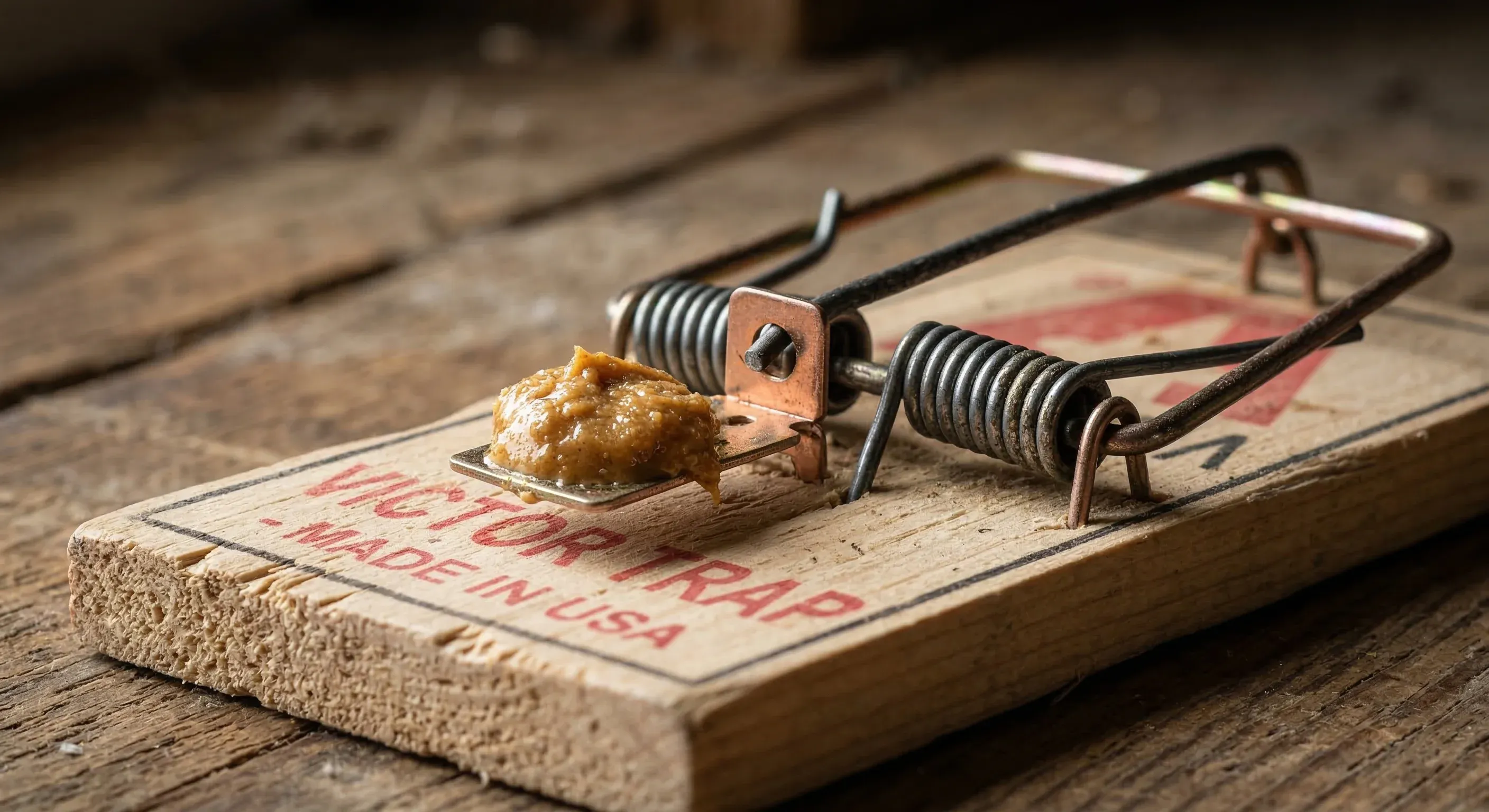
Snap Trap
Class: Hardware
Classic mechanical lethal control with fast reset, high reliability, and strong suitability for interior walls and runways.
The Snap Trap
The snap trap is the oldest, cheapest, and most reliable single-target lethal trap in residential rodent control. It remains an A-tier tool because it converts correct placement into immediate results without poison, subscription gimmicks, or complicated electronics.
Overview
A snap trap is not obsolete. It still outperforms most “modern” homeowner gadgets because it is fast, mechanically simple, and brutally clear about what it is supposed to do: kill one rodent instantly when body weight commits to the trigger.
Mechanism
The trap uses a high-tension spring and a bait pedal or expanded trigger plate. Once the rodent applies enough downward pressure while reaching for bait, the kill bar fires in milliseconds and breaks the spine or neck.
Variants
- Classic wood base: cheap, sensitive, but harder to clean and more vulnerable to moisture.
- Plastic quick-set jaws: more durable, washable, and easier for no-touch disposal.
- Rat-sized models: required for Norway rats and other larger targets.
Flaws
- Single-catch only; major infestations require many traps.
- Manual resetting means more homeowner handling.
- Wrong size selection causes poor kill performance.
- Bad placement makes even a perfect trap look ineffective.
Bait Synergy
- Best: sticky baits like peanut butter or hazelnut spread that force licking and pressure.
- Worst: loose nuts or dry food chunks that can be grabbed and stolen.
Deployment
Place the trap completely flush to baseboards and edges where rodents already travel. For mice, volume matters. For rats, pre-baiting and size matching matter even more.
Conclusion
The snap trap remains the benchmark mechanical tool because it rewards discipline. If the species, size, bait, and wall placement are correct, it delivers consistent results with very little nonsense.
Explore the Pest.gg Wiki