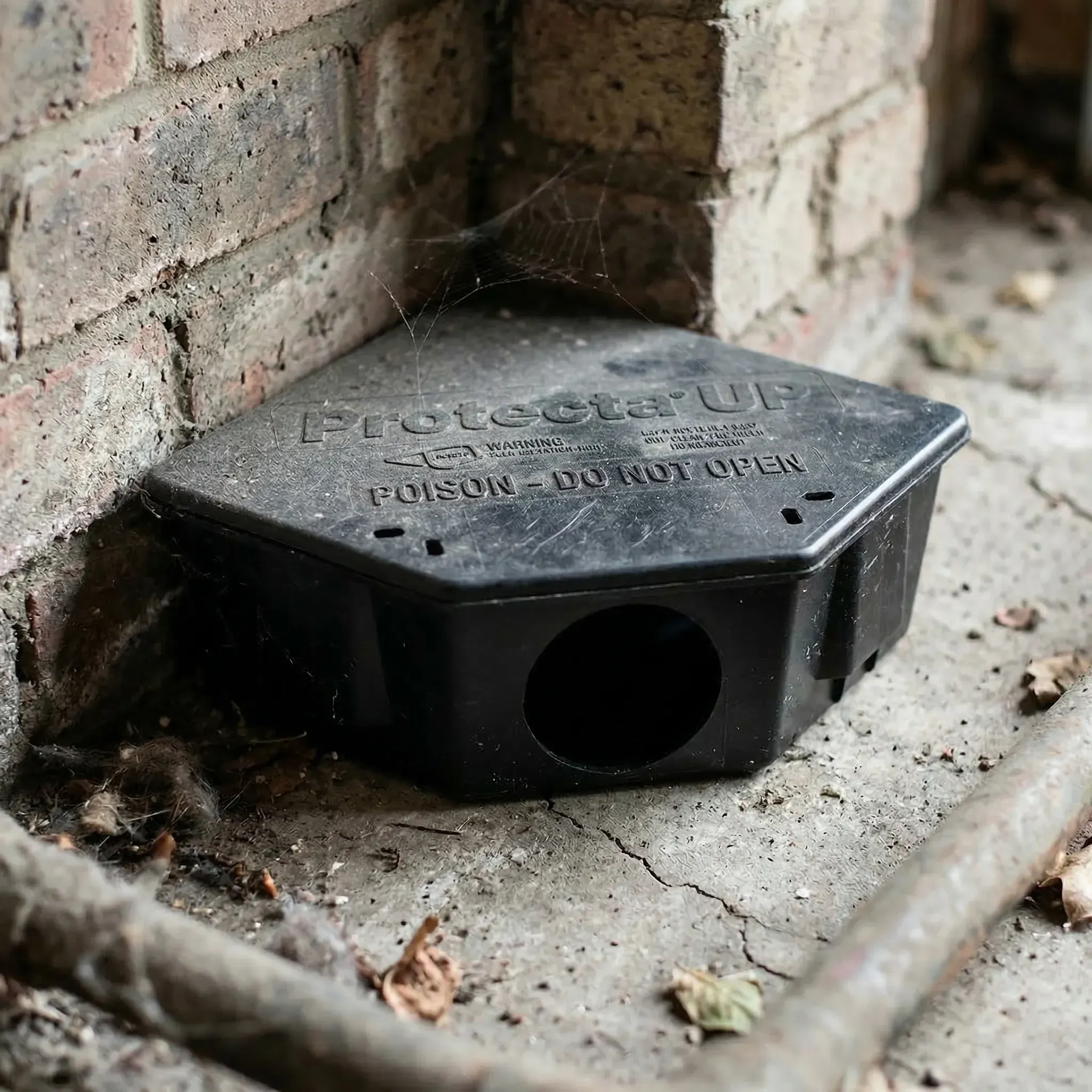
Bait Station
Class: Hardware
Secure bait-delivery housing profile, covering tamper resistance, placement logic, and common misuse in residential settings.
Bait Station
A bait station is not a magical kill box. It is a secure housing system designed to control access to toxic bait or bait blocks while reducing tampering by children, pets, and non-target animals.
Overview
The strength of a bait station is containment, not speed. It is best understood as a delivery platform rather than a stand-alone strategy. Used correctly, it can protect bait from weather and keep access restricted to the intended target path.
Mechanism
The enclosure channels rodent movement through a limited entry path toward a secured bait block or tray. The station does not kill directly; it only controls how the toxic or attractant material is presented.
Best Use Cases
- exterior perimeter monitoring
- commercial or outbuilding protection
- controlled toxic programs where tamper resistance matters
- maintenance zones where weather would ruin loose bait
Flaws
- It does nothing without a bait program and monitoring.
- Homeowners often overestimate how fast bait will solve the infestation.
- Dead rodents may end up in inaccessible voids.
- It is not a substitute for exclusion or trap-based confirmation.
Deployment
Stations belong along walls, exterior edges, fence lines, sheds, and known travel corridors. Random scattering in the yard is poor practice and weakens control.
Conclusion
The bait station is a containment tool, not a miracle tool. It is useful when access control matters, but it must sit inside a larger strategy that still includes inspection, capture, and exclusion.
Explore the Pest.gg Wiki